Braided Chocolate Rugelach Cake
By Sapir Dahan

- 14 ingredients
- 16 steps
- Oven: 350°F (180°C)
- Baking time: About 25–30 minutes
- Makes: 2 large braids
- Dairy: Dairy
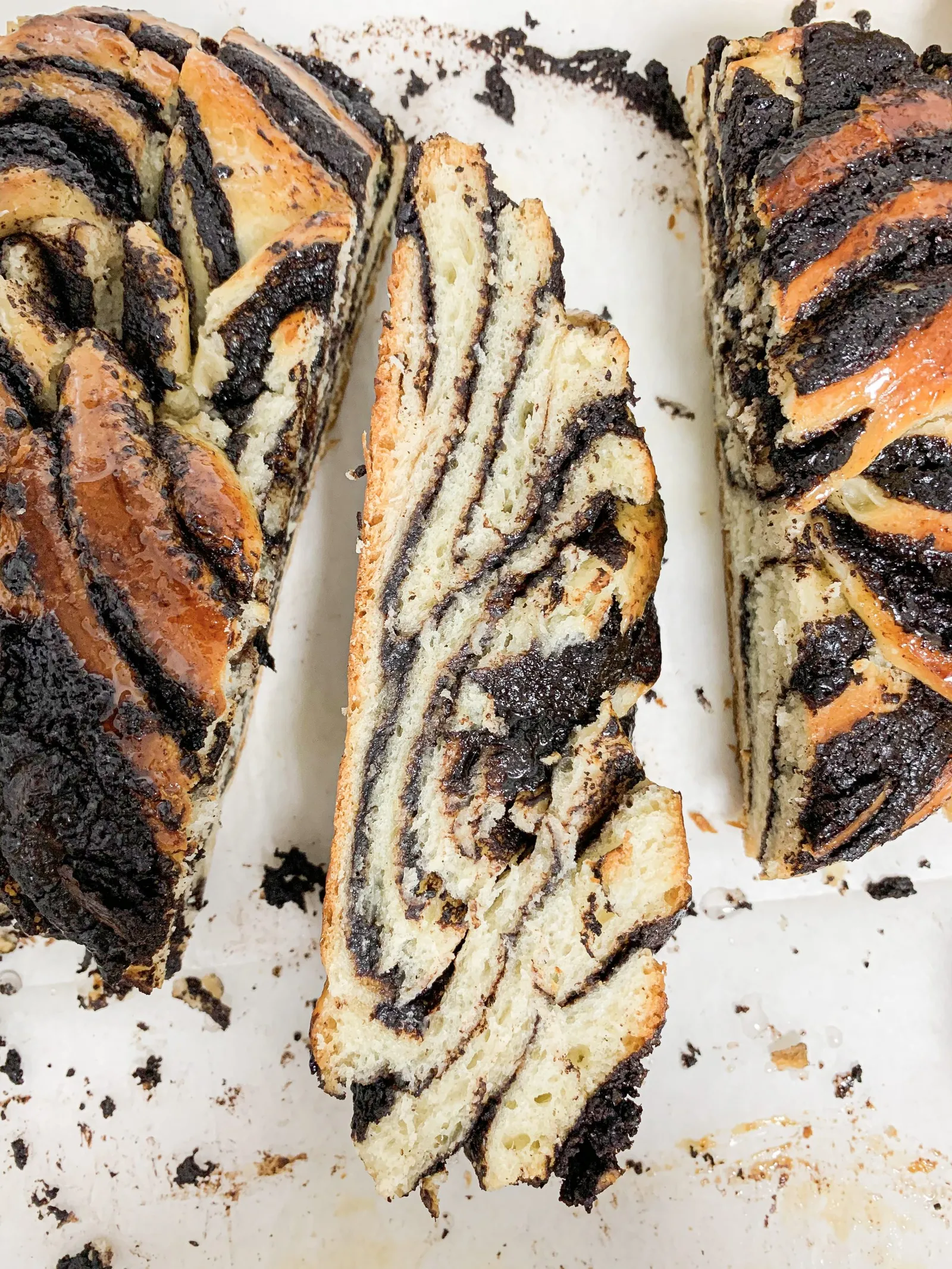
A rugelach yeast cake made from a soft, buttery dough with a chocolate-cocoa filling, shaped into a braid and baked straight on a baking sheet. As it bakes it spreads out and forms beautiful layers. Makes 2 large braids.
In step-by-step mode your screen stays on, and the site remembers where you stopped.
Last weekend I was craving rugelach, but I didn't have time to shape them one by one, and that's when the idea came to me: a rugelach yeast cake. A soft, buttery dough, rolled thin and packed with filling, shaped into a braid and baked straight on the baking sheet, so you don't even need a special pan. As it bakes, the cake spreads out and forms beautiful, mouthwatering layers.
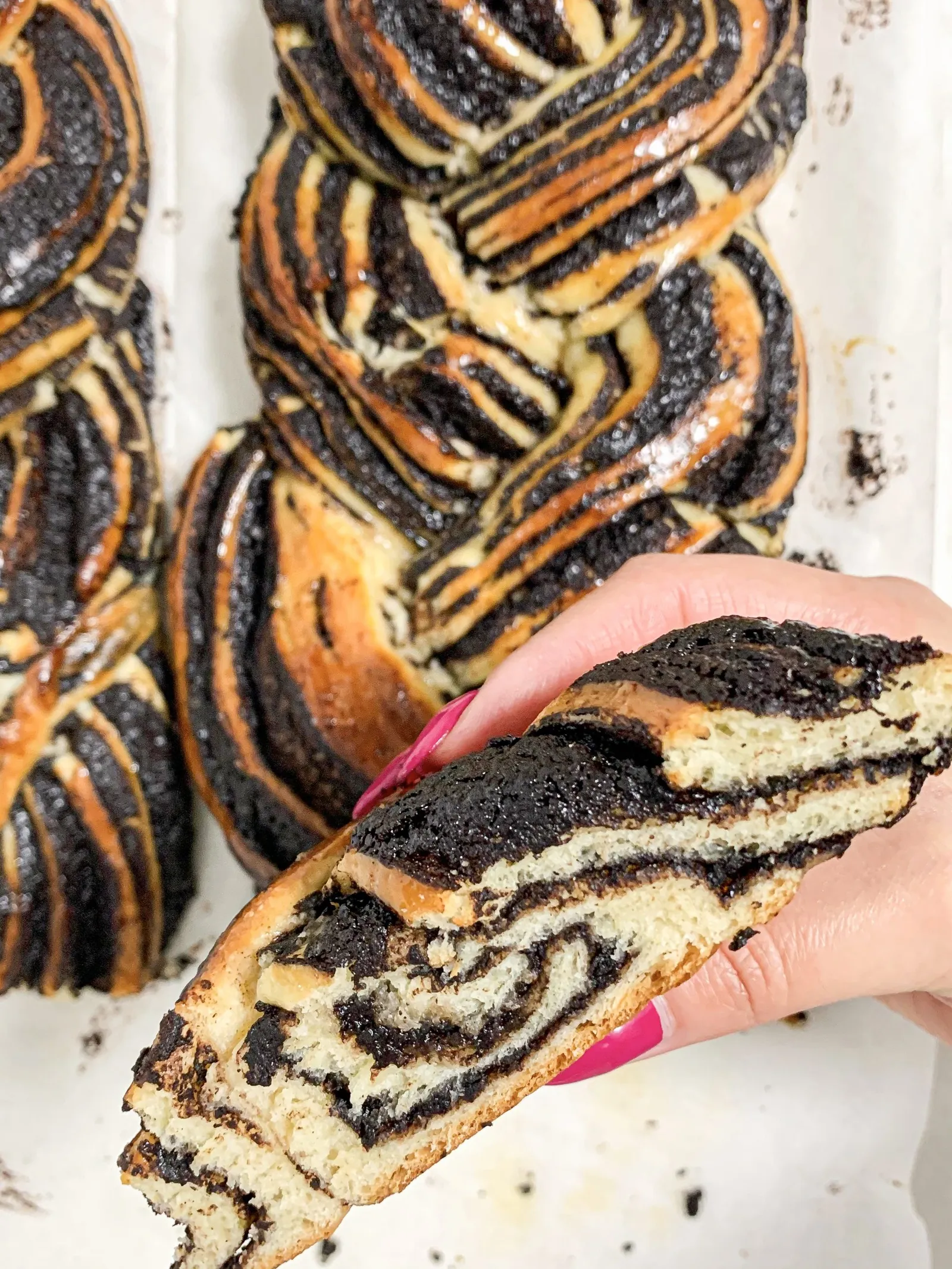
Ingredients for 2 large, wide braids
For the dough
- 2 large eggs, at room temperature.
- 240 ml milk (1 cup).
- 100 g sugar (½ cup).
- 650 g all-purpose flour (4½ cups + 2 tablespoons).
- 15 g instant dry yeast (1 tablespoon + 1 teaspoon).
- 120 g butter, softened and cut into cubes.
- A pinch of salt.
For the filling
- 200 g butter.
- 100 g dark chocolate (you can swap in milk chocolate).
- 90 g cocoa powder (½ cup + 2 tablespoons).
- 160 g sugar (¾ cup; if you like it sweeter, use 1 cup).
For the syrup
- 100 g sugar (½ cup).
- 120 ml water (½ cup).
For brushing
- 1 beaten egg + 1 teaspoon milk.
Instructions
- Start with the dough: in the bowl of a stand mixer fitted with the dough hook, combine the milk, sugar and eggs. Beat briefly until combined.
- Add the flour, yeast and butter cubes. Knead for about 5 minutes, until the butter cubes disappear into the dough.
- Add the salt and knead again on low speed for about 6 minutes, until the dough is smooth and sticky (the dough is supposed to be sticky, so there's no need to add flour).
- Lightly oil a bowl and put the ball of dough in it. Cover with plastic wrap and let it rise at room temperature for about an hour, or until doubled in size (on cold days it takes longer).
- Toward the end of the rise, make the filling: in a microwave-safe bowl, combine the butter and dark chocolate. Melt in short bursts until completely melted (stir between bursts).
- Let it cool for about a minute, then add the cocoa and sugar. Stir into a paste-like mixture and set aside.
- Shaping the cakes: lightly flour your work surface. Put the dough on it and divide it into 3 equal pieces.
- Put one piece of dough on the work surface and dust it with a little flour. Roll it out into a thin square sheet (it doesn't have to be perfect), spread it generously with filling using a small offset spatula, and roll it up into a log. Press the seam closed with your hands.
- Repeat with the rest of the dough (3 logs in all). Line a baking sheet with parchment paper, put the logs on it and freeze them for 15 minutes (you can skip this step).
- After freezing, cut each log in half lengthwise into 2 strips, for 6 strips in all.
- Make 2 three-strand braids and place them well apart on a baking sheet lined with parchment paper.
- Cover with a kitchen towel and let them rise at room temperature for about 40 minutes.
- Beat the egg and milk together and gently brush the cakes.
- Bake in an oven preheated to 350°F (180°C) for about 25–30 minutes.
- While the cakes are in the oven, make the syrup: put the sugar and water in a saucepan and cook over medium heat until the sugar dissolves and the syrup thickens slightly. Turn off the heat and let it cool.
- As soon as the rugelach cakes come out of the oven, brush them generously with the syrup.
Good to know
- Knead the dough well.
- If the dough tears while you roll it, press the tear together with your hands and roll it out again.
- You can also bake the cakes in a loaf pan.
- You can swap the filling for any spread you like.
Questions and answers
Can I bake the rugelach cake in a pan?
Yes. You can bake the cakes in a loaf pan instead of straight on the baking sheet.
What can I use instead of the chocolate filling?
Any spread you like works as a filling.
My dough is sticky. Should I add more flour?
No. The dough is supposed to be sticky, so there's no need to add flour.
What do I do if the dough tears while I'm rolling it?
Press the tear together with your hands and roll it out again.