





Medovik, Russian Honey Layer Cake with Sour Cream
By Sapir Dahan

- 11 ingredients
- 28 steps
- Oven: 350°F (180°C)
- Dairy: Dairy
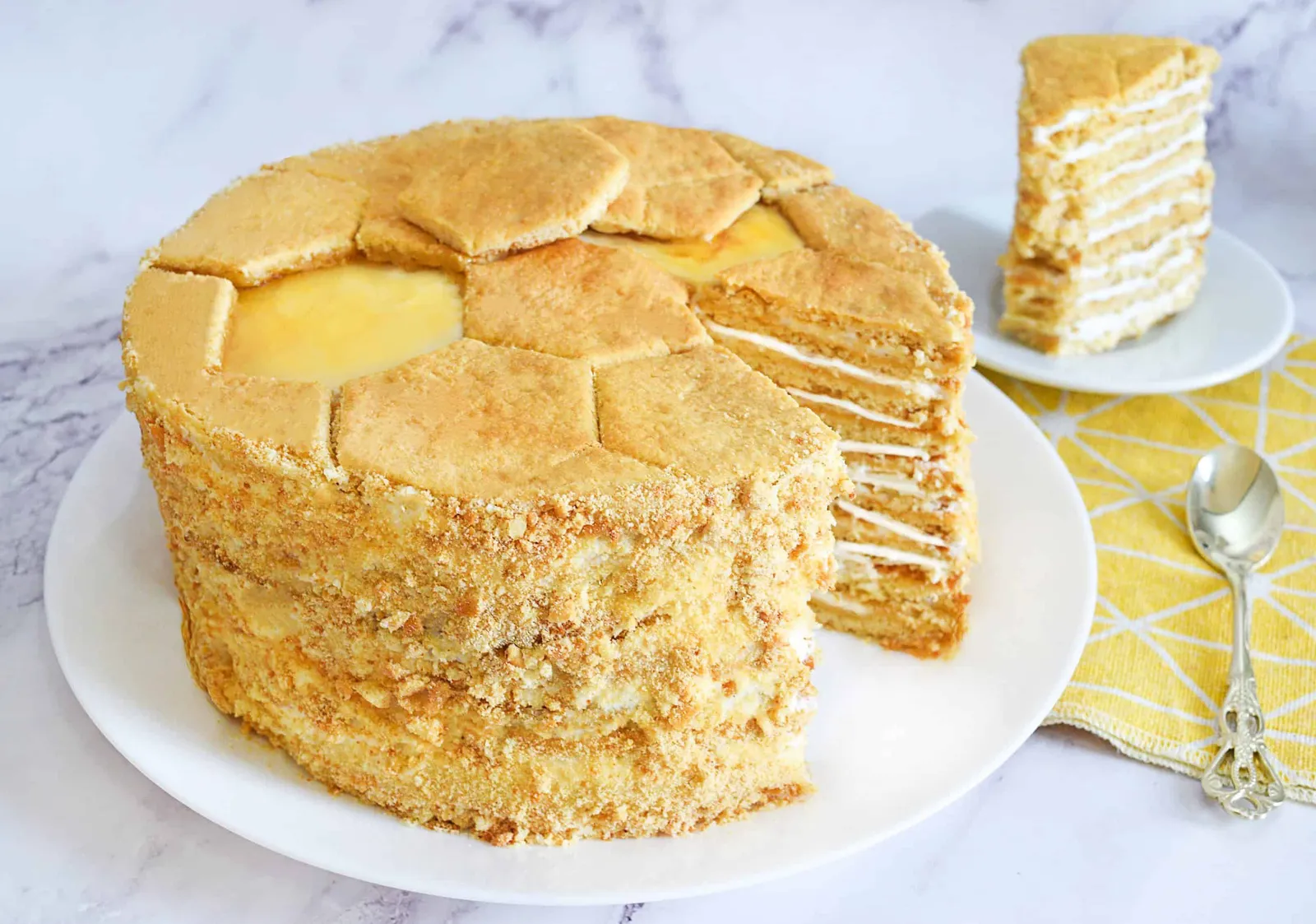
Medovik for Rosh Hashanah: a Russian layer cake of 9 thin honey dough rounds with a sour cream and whipped cream filling. A special, impressive 7-inch (18 cm) cake with a story behind it.
In step-by-step mode your screen stays on, and the site remembers where you stopped.
Rosh Hashanah is around the corner, and how could we go without a special, impressive and wonderfully delicious honey cake? Medovik is a Slavic layer cake (about 9 layers), popular in the countries of the former Soviet Union, and its main ingredients are honey and sour cream or condensed milk.
A moment of history: the story behind medovik
The cake was created in the 19th century in the Russian Empire by a young chef who wanted to impress Empress Elizabeth Alexeievna, the wife of Alexander I. Empress Elizabeth couldn't stand honey, and any dish with even a drop of it disgusted her. But one day, a new young pastry chef in the kitchen, who didn't know about the empress's hatred of honey, baked a new cake with honey and thick sour cream. To everyone's surprise, Empress Elizabeth fell in love with it right away.
Ingredients for a 7-inch (18 cm) cake

For the dough
- 550 g self-rising flour.
- 3 large eggs.
- 100 g sugar.
- 110 g honey.
- 130 g butter.
- ½ teaspoon baking soda.
- 1 teaspoon vanilla extract.
For the cream
- 400 g sour cream.
- 45 g powdered sugar.
- 20 g honey.
- 180 ml heavy cream.
Instructions
In a small bowl, whisk the eggs with the vanilla and set aside until needed.
Put a pot of boiling water over medium heat.
Put the butter, honey and sugar in a heatproof bowl and set it over the pot of hot water (a double boiler).
Cook everything together, whisking constantly, until completely melted (about 4 minutes).
While whisking, add the eggs in a thin stream, then add the baking soda too and whisk well.
Turn off the heat and take the bowl off the pot.
Add half the flour to the bowl and whisk until the mixture is smooth and runny.
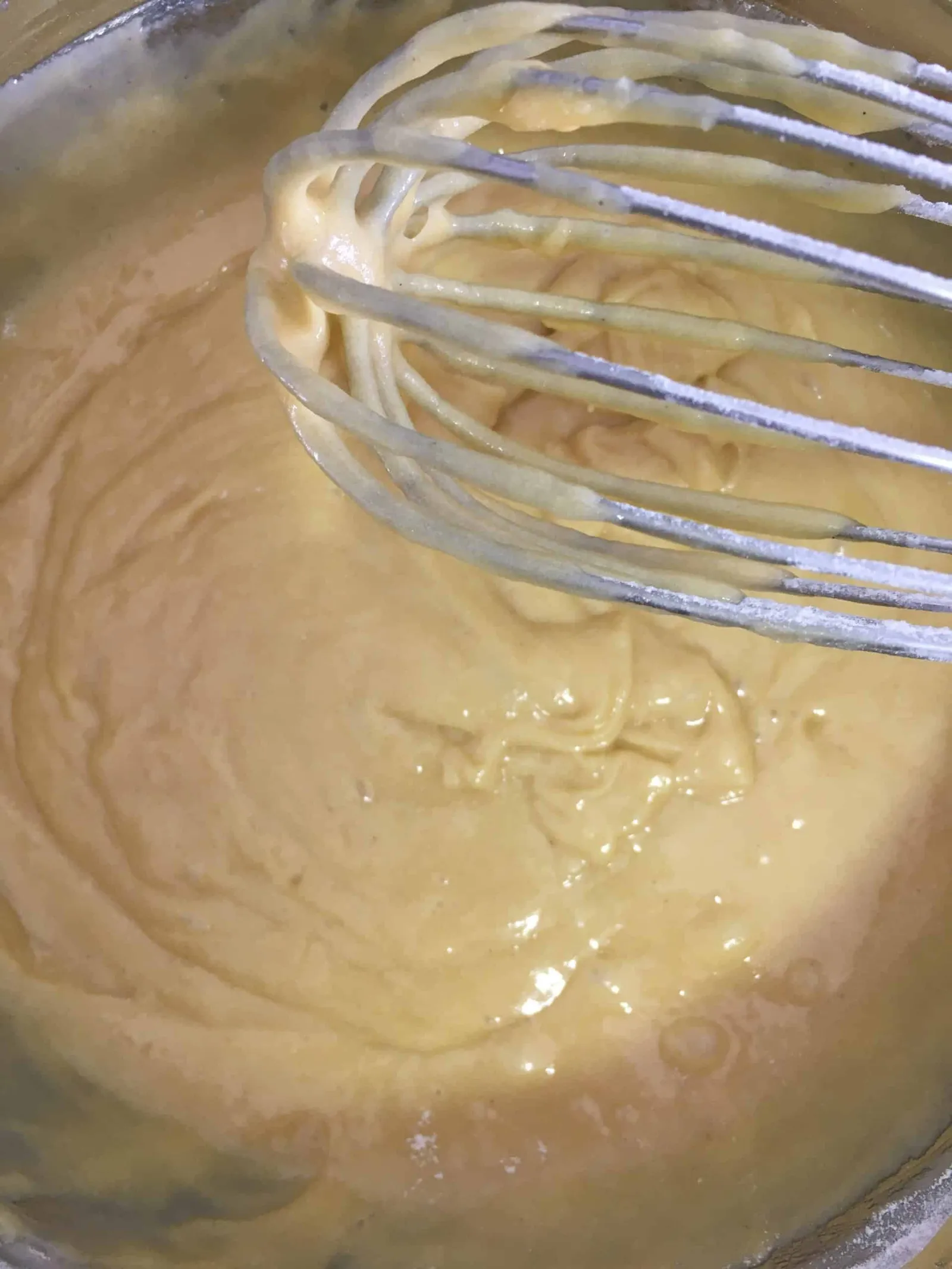
Add the rest of the flour and knead by hand, wearing a glove. The dough will feel sticky at first, but after a few minutes of kneading you'll get a smooth, even ball of dough.
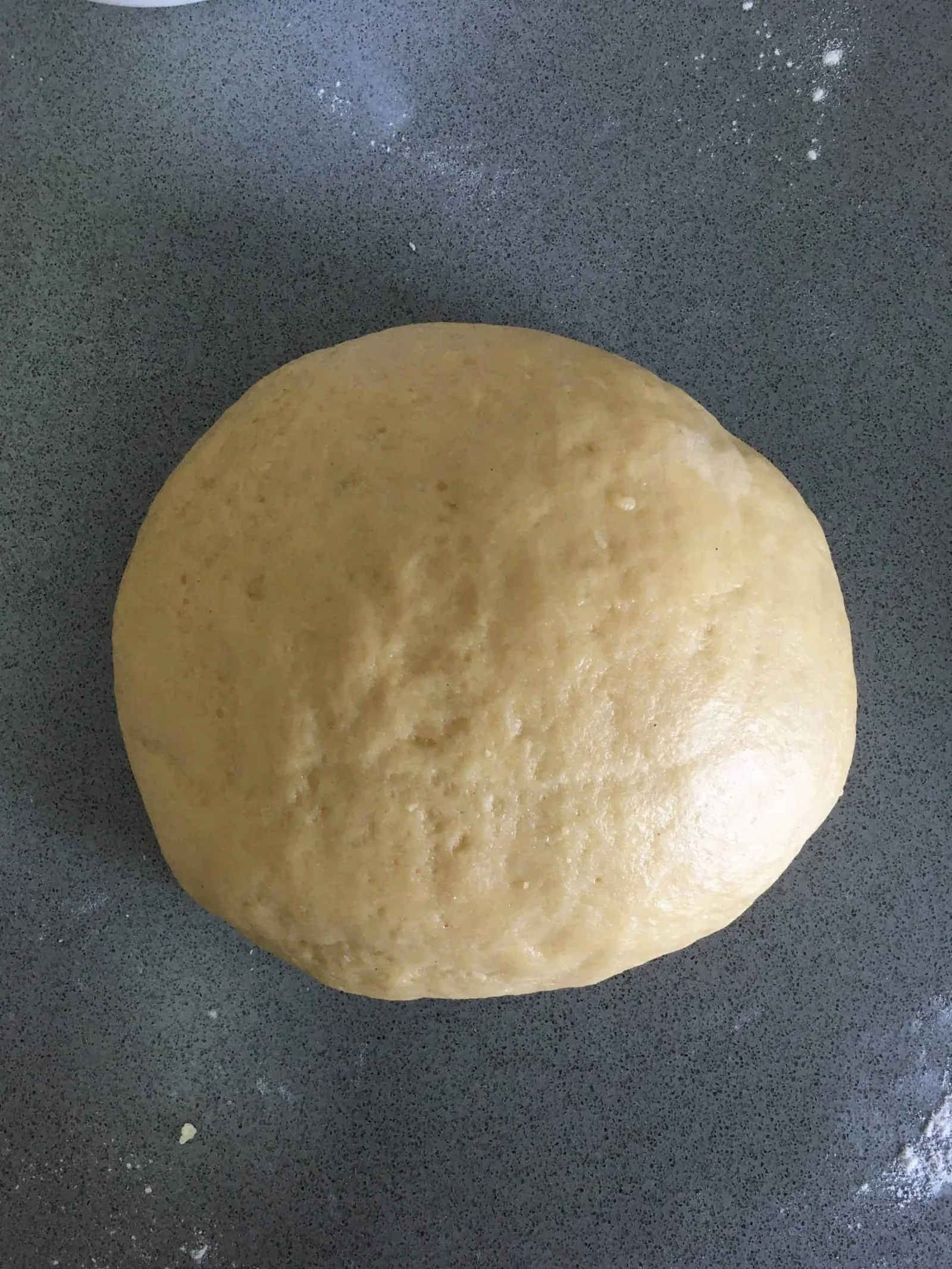
Divide the dough into 9 equal pieces and cover them with plastic wrap to keep the dough from drying out.
Dust a work surface with a little flour and roll a ball of dough out into a thin sheet.
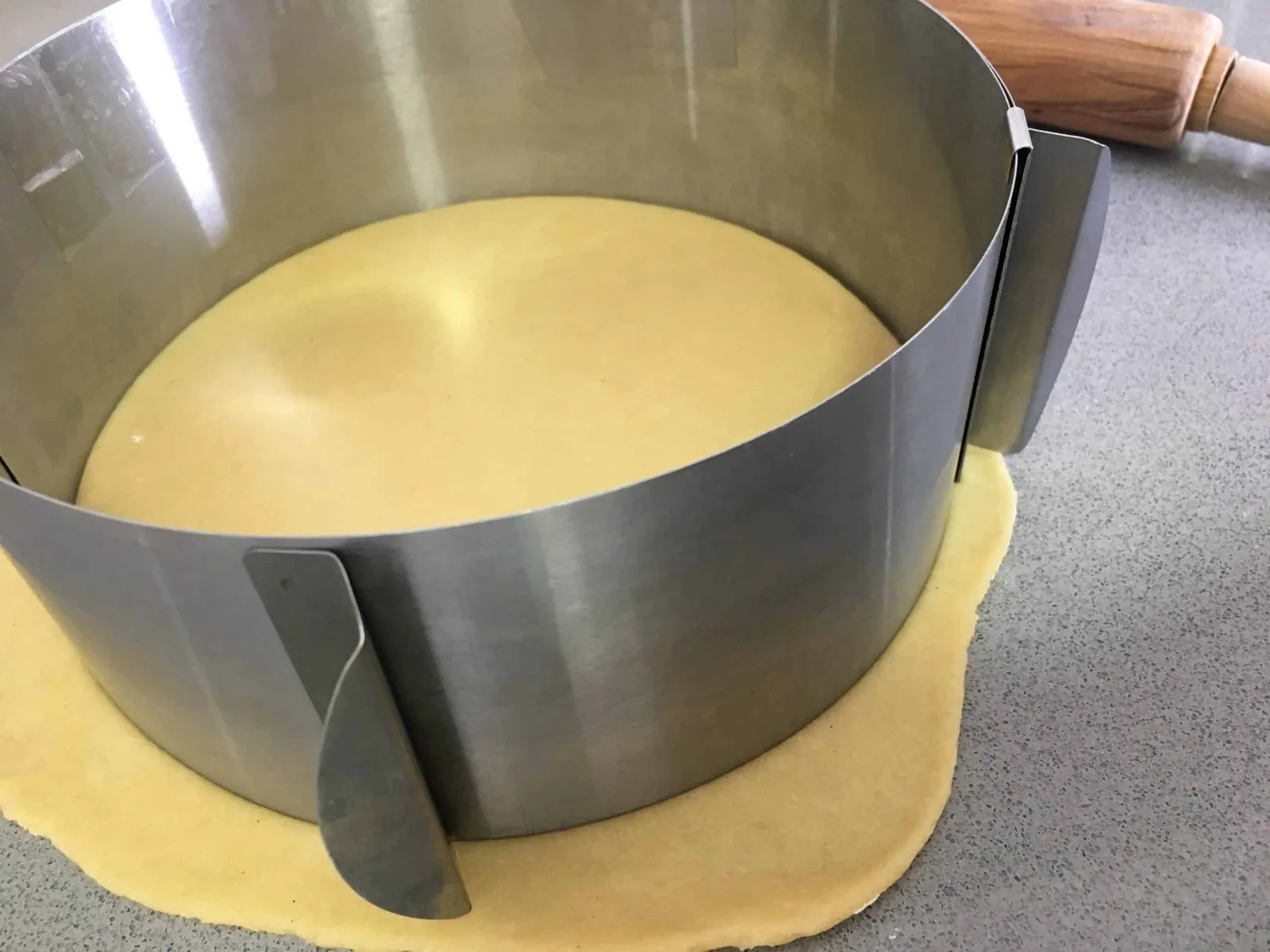
Using a round cake ring (8 inches / 20 cm across), cut the sheet of dough into a circle and prick it all over with a fork.
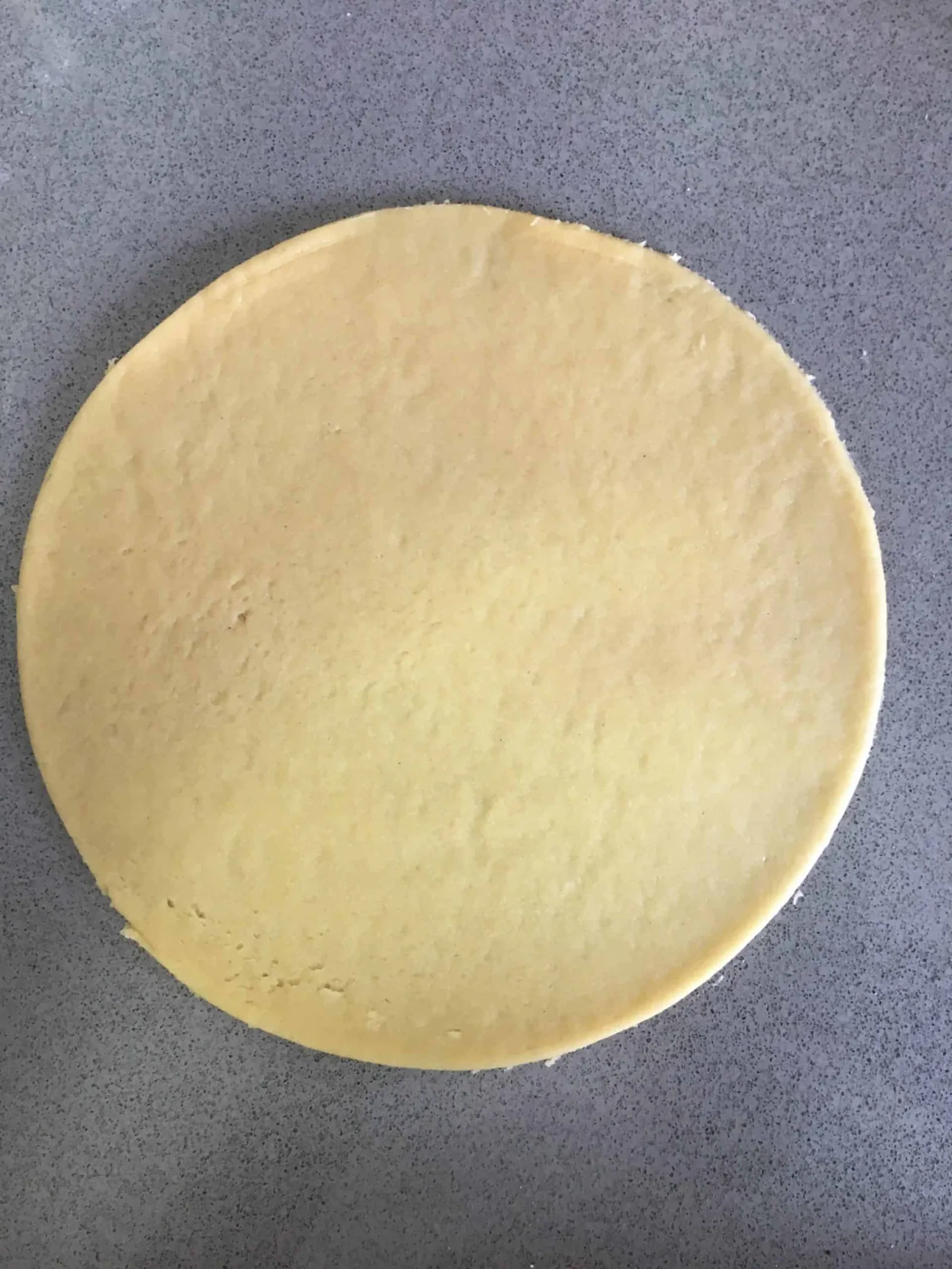
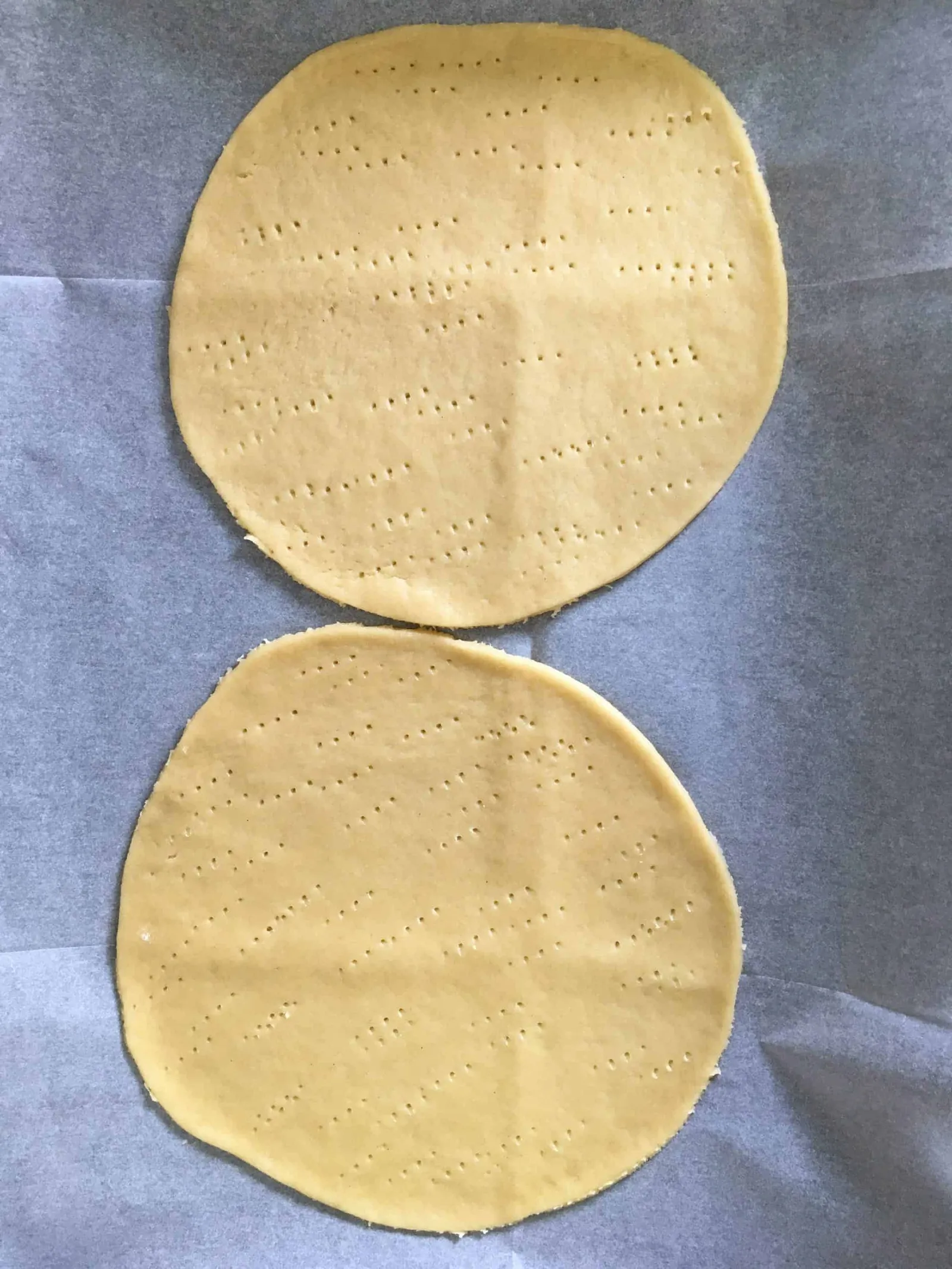
Move it to a baking sheet lined with parchment paper and bake at 350°F (180°C) for about 5-6 minutes.
Repeat the same way until you have 8 baked rounds, and let them cool completely.
Using a 7-inch (18 cm) round cake ring, cut the rounds again and save the scraps in a bag.
Roll out the ninth ball of dough the same way and cut it into a circle. Print out a hexagon pattern and lay it on top of the round of dough.
Using an offset spatula, mark the hexagons side by side until the whole round is covered (you can also use a knife, but use the back of it and not the sharp edge, because we only want to mark the dough, not cut it).
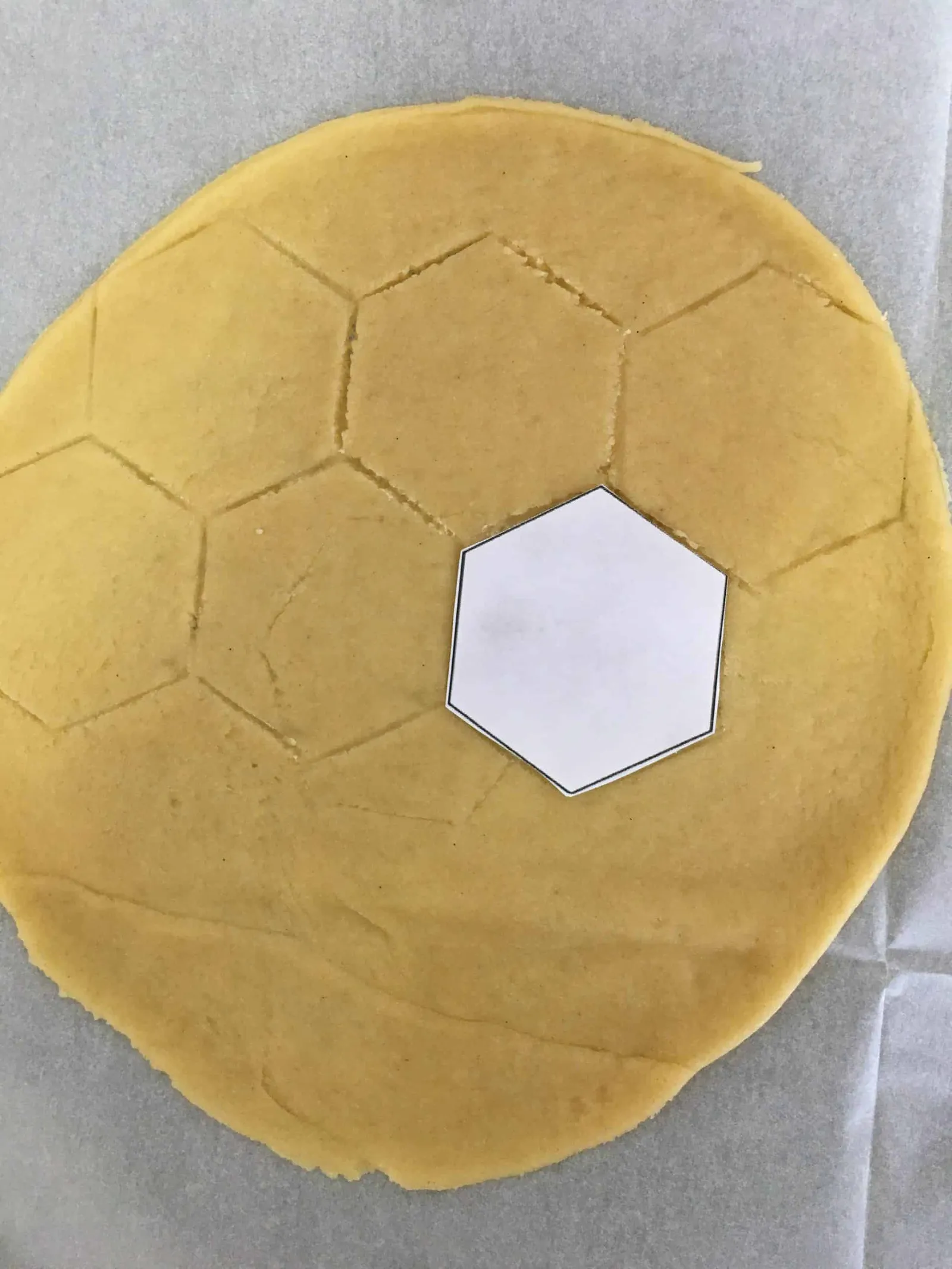
Bake and let cool. Cut it into a circle again and put the scraps in the bag.
Using a sharp knife, carefully lift out 2 hexagons and set them aside.
Now make the cream: in a bowl, whisk the sour cream, honey and powdered sugar well.
In the bowl of a stand mixer, whip the heavy cream until firm but not too stiff.
Fold the two mixtures together, take out about ½ cup of the cream and put it in the fridge.
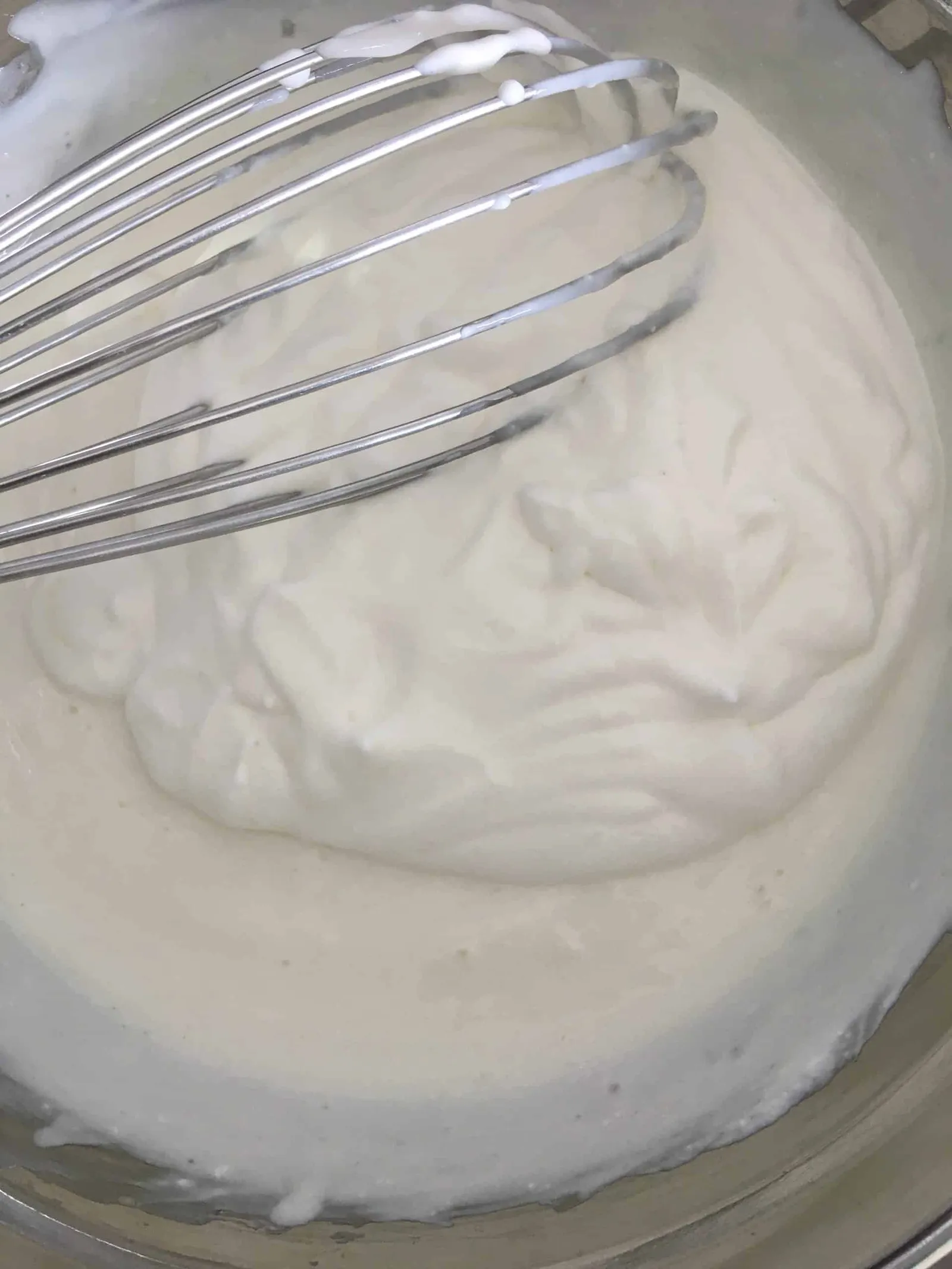
Put a round of dough on a large, flat plate, spread cream over it and top with another round.
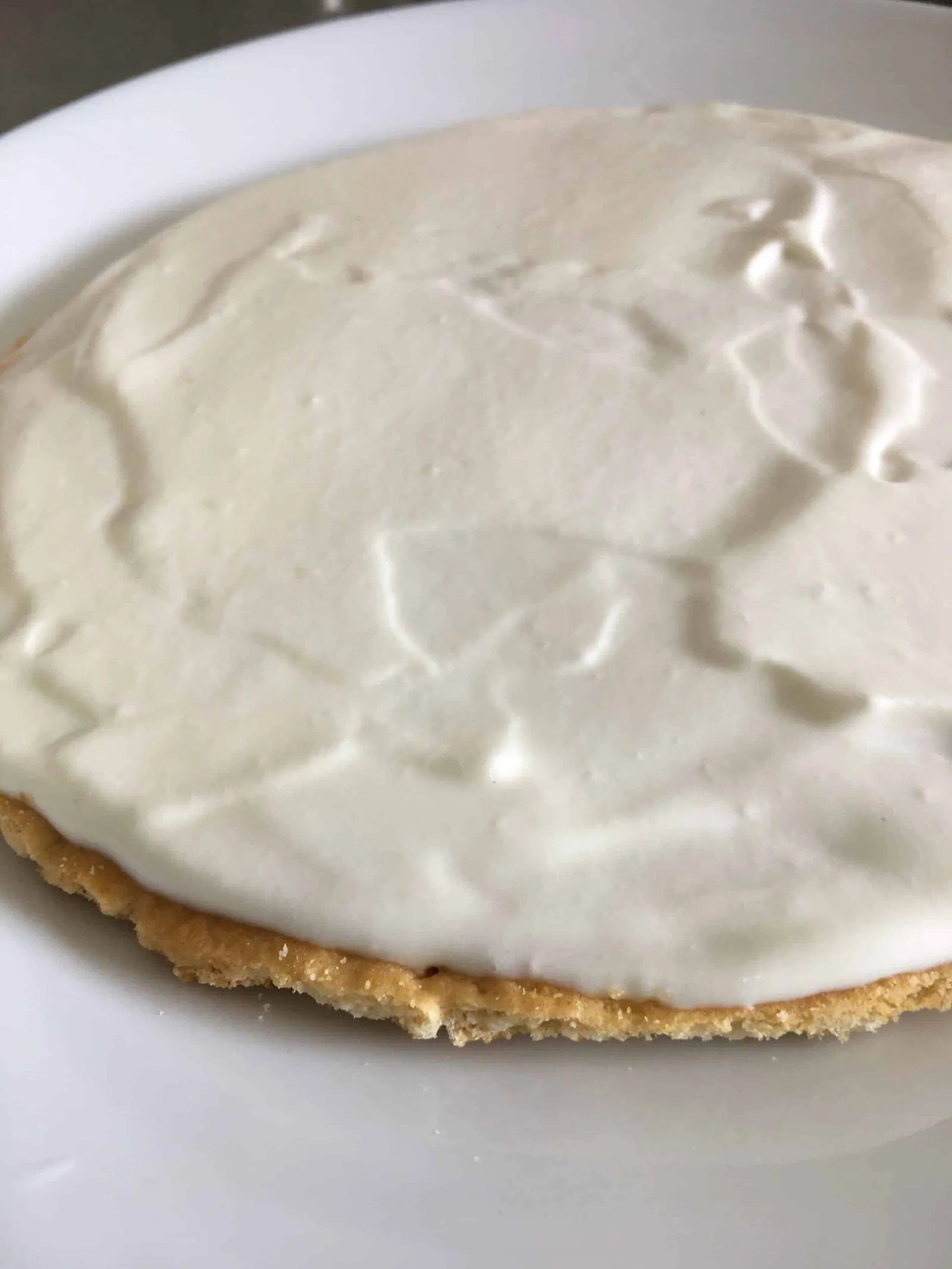
Continue the same way until you've used all 8 layers.
Spread cream over the last layer and top with the final round (the one with the hexagon pattern).
Take out the cream you saved in the fridge and spread it around the cake with a small offset spatula.
Move the dough scraps from the bag to a food processor and grind them into crumbs.
Press the crumbs around the sides of the cake and chill for 30 minutes.
Drizzle a little honey into the hexagon pattern.
Good to know
- You can skip the hexagon pattern and make the top layer a plain round.
- You can add a little cinnamon to the dough.
Questions and answers
How many layers does medovik have?
Medovik is a Slavic layer cake with about 9 layers: you divide the dough into 9 equal pieces and bake each round separately.
What do I do if the medovik dough is sticky?
That's normal: the dough feels sticky at first, and after a few minutes of kneading you get a smooth, even ball of dough.
Can I make medovik without the hexagon pattern?
Yes, you can skip the hexagon pattern and make the top layer a plain round.
Can I add spices to the honey cake dough?
Yes, you can add a little cinnamon to the dough.